
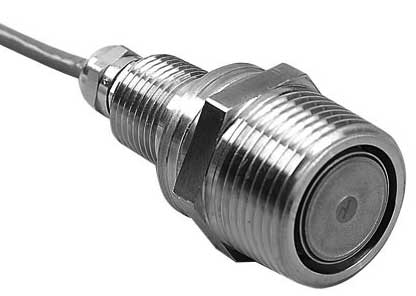
A low pressure transducer is a device that measures small pressure changes and converts them into an electrical signal that can be read by control systems or monitoring equipment.
A pressure transducer is a measuring device that converts applied pressure into an electrical signal. In low pressure applications, these devices are designed to detect very small changes with high accuracy. Most pressure transducers consist of two primary components that work together to measure and convert pressure into a usable output.
The first component is an elastic material that deforms when pressure is applied. The second component is an electrical element that detects this deformation and converts it into a usable signal.
Key Components of a Low Pressure Transducer
Depending on the pressure range being measured, the elastic material can take different shapes and sizes. Common examples of elastic elements include Bourdon tubes, pistons, diaphragms, and bellows. Among these, diaphragms are the most commonly used for low-pressure applications due to their sensitivity and ability to detect small pressure changes.
The choice of sensing element depends on the pressure range, accuracy requirements, and the environment in which the transducer is used.
Types of Low Pressure Transducers
Low pressure transducers can be classified based on how they convert pressure into an electrical signal. The most common types include resistive, capacitive, and inductive transducers, each using a different method to detect changes in pressure.
Each of these technologies responds to pressure changes in a unique way, depending on the design and application requirements.
- Resistive pressure transducers use strain gauges, which are bonded to the deformable material. Any change in the deformation causes the change in the electrical resistance of each strain gauge which can be measured by a Wheatstone bridge.
- In the capacitance type pressure transducers, change in pressure is measured change in capacitance between two capacitance plates. One plate bonded to the deformable side of the elastic material while another one is bonded to the unpressurized surface.
- In an inductive pressure transducer, the deformation of the elastic material is used to provide linear movement of a ferromagnetic core. This linear movement will vary the induced AC current.
Applications of Low Pressure Transducers
Low pressure transducers are used in a wide range of industries where precise pressure monitoring is essential. In medical applications, they are commonly used in devices such as ventilators, nebulizers, and spirometers to ensure accurate airflow and pressure control.
In industrial environments, they are frequently used in HVAC systems, cleanrooms, and duct pressure monitoring to maintain system efficiency and safety. Their ability to measure small pressure variations makes them critical in processes where even minor deviations can impact performance.
Low Pressure Measurement
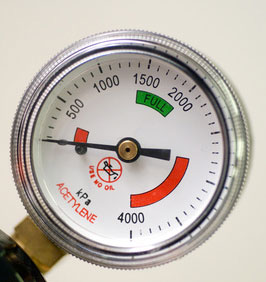
Several types of transducers are specifically designed for measuring low vacuum and low-pressure ranges, depending on the level of precision required. Common examples include:
- Bourdon gauges
- piezoresistive diaphragm gauges
- capacitance diaphragm gauges
Bourdon gauges typically measure pressures in the range of 0 to 1000 mbar. Diaphragm gauges are capable of measuring from approximately 0.1 to 1000 mbar.
For very low pressures, there are other types of transducers available, which are based on other principles. These include Pirani gauge, thermocouple, and ionization gauge.
The first two techniques are based on the rate at which heat is lost from a heated filament placed in the low-pressure environment. This heat loss is depended on the number of gas molecules per unit volume.
- Pirani gauge – This gauge calculates filament temperature by measuring filament resistance. Resistance measurement is measured with the help of a Wheatstone bridge circuit. The relation between the resistance and the applied pressure is highly non-linear.
- Thermocouple – In this type of pressure transducer, a thermocouple is attached to the heated filament to measure its temperature. For the reference temperature in the thermocouple, room temperature is used. The voltage output of the thermocouple varies non-linearly with the gas pressure.
- Ionization gauge – It is highly useful for measuring very small pressures in the range of 10–3 atm to 10–13 atm. Here, the gas, whose pressure is to be measured, is ionized with the help of a heated filament. The current is measured between two electrodes in the ionized region, which depends on the gas pressure, because the number of ions per unit volume depends on the gas pressure.
These specialized measurement methods are typically used in advanced or scientific applications where extremely low pressure levels must be accurately measured.
Pressure Measurement Characteristics
In many low-pressure transducers, the relationship between pressure and output signal is designed to be as linear as possible, allowing for easier interpretation and more accurate control.
- Low-pressure measurement is widely used in both medical and industrial applications. In healthcare settings, devices such as nebulizers and spirometers rely on accurate pressure readings to function properly. In industrial environments, low-pressure transducers are commonly used for HVAC control, static duct pressure monitoring, and other systems where airflow and pressure must be carefully regulated.
Materials and Safety Considerations
Some pressure transducers use materials such as mercury or sodium-potassium (NaK) to assist with pressure sensing and signal transmission. However, these materials can present safety and environmental concerns. Mercury is restricted or banned in many regions, while NaK can be hazardous due to its reactivity with air.
Newer transducer designs are moving toward safer alternatives, including dry or oil-free systems that rely entirely on electronic sensing. These designs not only improve safety but also extend product lifespan and reduce maintenance requirements.
As industry standards evolve, manufacturers are increasingly prioritizing safer, more reliable materials in pressure sensing technologies.
Frequently Asked Questions
What is a low pressure transducer?
A low pressure transducer is a device designed to measure small pressure changes and convert them into an electrical signal for monitoring or control.
How do low pressure transducers work?
They work by using a sensing element that deforms under pressure and an electrical component that converts that deformation into a measurable signal.
Where are low pressure transducers used?
They are used in medical devices, HVAC systems, industrial processes, and any application requiring precise low-pressure measurement.
What is the difference between a pressure sensor and a pressure transducer?
A pressure sensor detects pressure changes, while a pressure transducer converts those changes into an electrical output signal that can be used by control systems.
If you need help selecting or sourcing the right low pressure transducer for your application, our team is here to help. Call us at 800-844-8405 or fill out a contact form to get started.
Looking For Industrial Automation Parts? We Can Help!