
The Hidden Cost of “Good Enough” Maintenance
Most Midwest manufacturers aren’t ignoring maintenance—they’re just stuck in a model that no longer matches today’s reality.
Preventive maintenance (PM) has been the gold standard for decades:
- Scheduled downtime
- Routine part replacements
- Calendar-based inspections
It feels proactive.
But in a world of tight labor, rising costs, and pressure for uptime, “good enough” maintenance is quietly creating:
- Unnecessary part replacements
- Missed early warning signs
- Skilled labor tied up in low-value tasks
The result? You’re spending more… and still reacting to failures.
Preventive Maintenance: Predictable, But Not Precise
Preventive maintenance works on fixed intervals—whether the equipment needs it or not.
The upside:
- Simple to implement
- Easy to standardize
- Reduces catastrophic failures (to a point)
The downside:
- Over-maintenance (replacing healthy components)
- Under-maintenance (missing failures between intervals)
- Labor-heavy execution
In today’s environment, the biggest issue isn’t just cost—it’s capacity.
Most teams don’t have the people to keep up with rigid PM schedules and respond to real issues.
Predictive Maintenance: From Scheduled to Strategic
Predictive maintenance (PdM) flips the model.
Instead of asking “When should we check this?”
It asks: “What is this asset telling us right now?”
Using real-time data from sensors, drives, and control systems, PdM monitors:
- Temperature trends
- Vibration patterns
- Pressure changes
- Electrical signatures
The result:
- Maintenance happens only when needed
- Issues are caught earlier—before failure
- Teams focus on high-impact work
Why This Shift Matters Right Now
Three forces are accelerating the move toward predictive strategies:
1. Skilled Labor Shortages
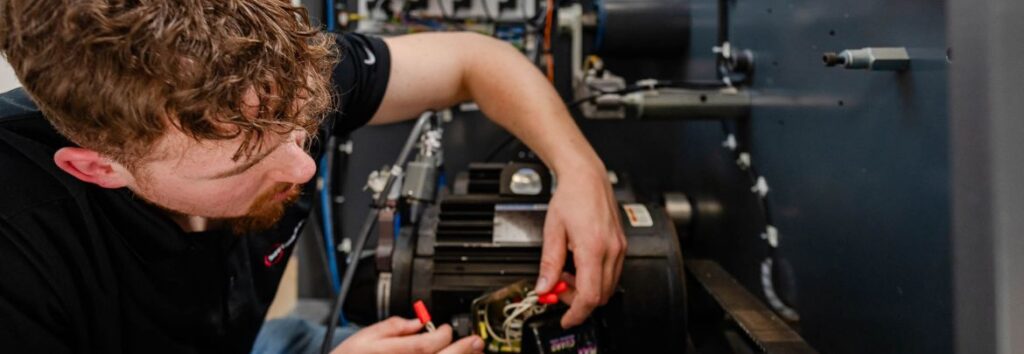
Your best technicians shouldn’t be spending time on routine checks that don’t uncover issues.
2. Uptime Pressure
Downtime is more expensive than ever—and less tolerated.
3. Smarter Equipment
Modern drives, sensors, and control systems are already generating the data—you just need to use it.
The Real Opportunity: You Don’t Have to Start from Scratch
Here’s where a lot of manufacturers hesitate:
“Predictive maintenance sounds expensive and complicated.”
It doesn’t have to be.
Most facilities already have untapped data inside:
- VFDs
- Temperature controllers
- Pressure sensors
- PLCs
The opportunity is in connecting and contextualizing that data—not replacing everything.
Where Sure Controls Fits In
This is where we see customers gain traction quickly.
Instead of a massive overhaul, we help manufacturers take targeted steps, like:
- Upgrading control panels to enable better data visibility
- Integrating sensors into existing systems
- Leveraging drives and instrumentation for condition monitoring
- Designing panels that make maintenance faster and more intuitive
The goal isn’t just better maintenance—
It’s freeing up your team while improving uptime.
Preventive vs. Predictive: It’s Not Either/Or
The most effective strategies today combine both:
- Preventive maintenance for baseline reliability
- Predictive maintenance for critical assets and failure prevention
Think of it as moving from:
“Maintain everything on a schedule”
to
“Maintain the right things at the right time.”
Final Thought: Maintenance Is Now a Competitive Advantage
The manufacturers pulling ahead right now aren’t just producing more—they’re operating smarter.
They’re:
- Reducing unnecessary maintenance
- Extending asset life
- Making better use of limited labor
And increasingly, they’re using data-driven maintenance strategies to do it.
Core Keywords (High Priority)
- Predictive maintenance
- Preventive maintenance
- PLC maintenance